Imagine walking into your home after a long day, greeted by a tail-wagging giant who offers unconditional love and companionship. Large dogs have a unique charm that captivates and comforts, offering both a sense of security and endless affection.
But what breeds are large dogs, and which one is the perfect fit for you? As you explore the world of these gentle giants, you'll discover a variety of breeds, each with its own distinct personality and quirks. This article will guide you through the fascinating world of large dog breeds, helping you find the one that matches your lifestyle and needs.
Ready to meet your potential new best friend? Let's dive in!
Popular Large Dog Breeds
Large dog breeds capture hearts with their size and gentle nature. They are known for their loyalty and protective instincts. Many people love their presence and companionship. In this section, learn about some popular large dog breeds.
Great Dane
Great Danes are gentle giants with a friendly nature. They are known for their towering height and elegant build. Despite their size, they are calm and affectionate. Families love them for their loyal companionship. They enjoy playtime and are good with children.
Saint Bernard
Saint Bernards are famous for their rescue work in the Alps. They have a strong and muscular build, paired with a gentle demeanor. These dogs are patient and good-natured, making them great family pets. Their thick coat requires regular grooming.
Mastiff
Mastiffs are known for their massive size and protective nature. They have a calm and loyal temperament. Their history traces back to ancient times as guard dogs. Despite their imposing appearance, they are gentle and friendly with family members. Regular exercise is important to keep them healthy.

Credit: www.reddit.com
Characteristics Of Giant Breeds
Giant dog breeds are fascinating creatures, known for their impressive size and unique characteristics. These gentle giants often capture our hearts with their sheer presence and loving nature. But what makes them stand out? Let's dive into the specific traits that define these majestic breeds.
Physical Attributes
Giant breeds have striking physical features that set them apart from smaller dogs. Their large stature can be both awe-inspiring and intimidating. Take the Great Dane, for instance, whose towering height often rivals that of a full-grown man.
Most giant dogs boast strong, muscular builds which are essential for supporting their massive frames. This physical strength is evident in breeds like the Mastiff, which can weigh up to 230 pounds. Their robust bodies require ample space and care, making them unsuitable for cramped living conditions.
You'll notice that many giant breeds have distinctive coats. The Saint Bernard's thick fur provides warmth in cold climates, while the Irish Wolfhound's wiry coat offers protection during hunts. These diverse physical traits make each breed uniquely suited to different environments.
Temperament And Behavior
Despite their size, giant breeds often possess gentle and calm temperaments. Their demeanor can be surprisingly serene, making them excellent companions for families. A Newfoundland, for example, is known for its kind and patient nature, often behaving like a gentle giant with children.
These breeds are loyal and protective, forming strong bonds with their families. This protective instinct is evident in breeds like the Bernese Mountain Dog, which is known for its watchful nature. They can be great guardians, but they also require proper training to ensure they don't become overly protective.
One interesting aspect is their surprising sensitivity. Despite their formidable appearance, giant breeds can be quite sensitive to their owner's emotions. Have you ever noticed your dog comforting you when you're down? This empathetic behavior is common among breeds like the Great Pyrenees, making them intuitive and loving companions.
Owning a giant dog breed is a unique experience that can bring immense joy and fulfillment. Have you ever wondered what life would be like with a gentle giant by your side?
Health Considerations
Large dog breeds captivate with their majestic appearance. Yet, their size often comes with unique health considerations. Owners must stay informed about potential health challenges. Understanding these can help ensure a long, happy life for your pet.
Common Health Issues
Large dogs face specific health problems. Joint issues are prevalent due to their weight. Hip dysplasia is a common concern. This condition affects the hip joint's development. Arthritis can also be a challenge as dogs age. Heart problems, such as dilated cardiomyopathy, are another risk. Bloat or gastric torsion is a life-threatening condition. It requires immediate veterinary attention.
Life Expectancy
Large breeds often have shorter life spans. Many live around 8 to 12 years. Genetics play a significant role in life expectancy. Proper diet and exercise can help extend their lives. Regular vet check-ups are essential for early disease detection. A healthy lifestyle greatly impacts their longevity.
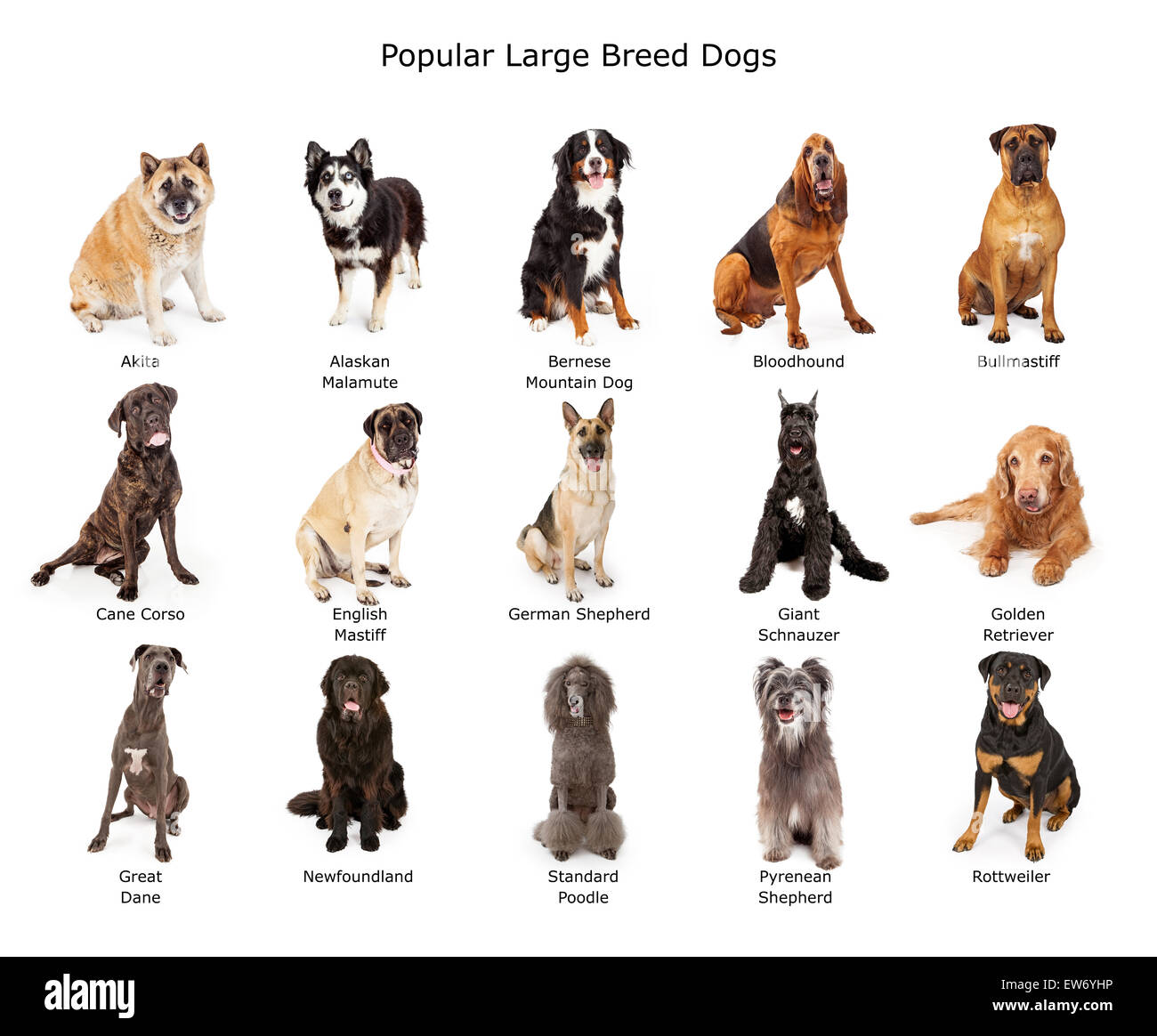
Credit: www.alamy.com
Care And Maintenance
Large dog breeds require special attention in care and maintenance. Their size brings unique needs and challenges. Owners must understand these to ensure a happy and healthy life for their pets. From feeding to exercise, each aspect requires thoughtful consideration.
Dietary Needs
Large dogs need a balanced diet for optimal health. Their meals should include proteins, fats, and carbohydrates. High-quality dog food is often the best choice. Consult a vet for specific dietary recommendations. Avoid overfeeding to prevent obesity. Regular meal schedules help maintain a healthy weight.
Exercise Requirements
Exercise is crucial for large dogs to stay fit. They need daily walks and playtime. Physical activities help burn energy and prevent boredom. Choose activities that match their breed and energy level. Consider games, fetch, or agility exercises. Regular exercise also strengthens their muscles and joints.
Training And Socialization
Large dogs like Great Danes, Saint Bernards, and Newfoundlands require early training and socialization. This helps them develop good manners and adapt to different environments. Ensuring they interact with people and other animals is crucial for their well-being.
Training and socialization are key elements in raising a well-behaved large dog. Large breeds are known for their strength and energy, which makes proper training essential for both their safety and yours. Socialization helps them interact positively with other animals and people, reducing the risk of aggressive behavior.
Basic Commands
Training your large dog with basic commands is crucial for effective communication. Start with simple commands like "sit," "stay," and "come." These commands not only make daily activities easier but also enhance safety in unpredictable situations. Use positive reinforcement to encourage good behavior. Treats, praise, and play are excellent motivators. Consistency is key; practice commands regularly and in different environments. Have you ever noticed how a well-trained dog enhances your daily walk? A large dog that responds to commands can make outdoor adventures more enjoyable. Your dog will feel more secure knowing what's expected of them.
Socializing With Other Animals
Socializing your large dog with other animals is vital. It helps them develop good manners and reduces fear or aggression. Start by introducing them to other dogs in controlled settings, like a dog park or training class. Observe your dog's body language. Are they comfortable or anxious? Adjust your approach based on their reactions. Gradual exposure is often more effective than overwhelming them. Imagine the peace of mind you'll have knowing your dog can interact well with others. It opens up opportunities for playdates, dog-friendly events, and even vacations. Plus, a well-socialized dog is usually happier and more adaptable in new environments. Training and socialization might seem challenging at first, but the rewards are worth the effort. Consistent practice and patience can turn your large dog into a gentle giant that is both a joy and a pride to own. What steps will you take today to start this rewarding journey with your furry friend?

Credit: www.pinterest.com
Living Environment
Discover breeds like Great Danes, Saint Bernards, and Mastiffs that stand out for their impressive size. These large dogs often require spacious living environments and plenty of exercise to stay healthy. Perfect companions for those who love a big, friendly presence.
Choosing the right living environment for large dog breeds is crucial for their happiness and well-being. These gentle giants require ample space and specific conditions to thrive. Understanding their needs will help you create a comfortable setting for them. Whether you live in an apartment or have a sprawling backyard, there's a suitable way to accommodate your furry friend. Let's explore how your living situation can match your dog's needs.
Suitable Living Spaces
Large dogs need room to move around. Apartments can work if they have access to parks or outdoor spaces. However, a house with a backyard is ideal for them. They enjoy stretching out and playing, which is easier with more space. Think about their comfort when choosing a living space. If you have a large dog, make sure your home has enough room for them to navigate without knocking things over. Consider your furniture arrangement and ensure there's space for your dog to lie down comfortably. Is your living space suitable for a large dog? It's not just about size; think about the layout. Ensure there's a cozy area for your dog where they can relax away from the hustle and bustle.
Outdoor Vs Indoor Living
Large dogs enjoy spending time outside. They love the freedom to roam and explore. A fenced backyard offers them a safe place to play and exercise. However, they also need time indoors with their family. Large dogs are social animals and crave interaction. Make sure they are not isolated outside for long periods. Balance is key. Provide outdoor time for exercise and indoor time for companionship. This mix ensures your dog remains healthy and happy. Are you meeting your dog's social needs indoors? Consider how often you engage with them. Frequent interaction is vital for their mental health. Providing a suitable living environment for your large dog involves a blend of outdoor and indoor spaces. It's about creating a harmonious space where they can enjoy the best of both worlds.
Breeding And Adoption
Large dog breeds like Great Danes and Saint Bernards are known for their impressive size and strength. These dogs require ample space to thrive and enjoy exercise. Their loving nature makes them gentle giants, perfect for families seeking a loyal companion.
Breeding and Adoption Choosing a large dog breed is a big decision. Whether you're interested in breeding or adoption, both paths offer unique experiences and responsibilities. From understanding the breed's characteristics to ensuring a loving home environment, the journey is filled with learning and joy.
Selecting A Breeder
Finding a reputable breeder is crucial for acquiring a healthy large dog. Look for breeders who prioritize health and temperament. You might want to visit their facilities and meet the puppy’s parents. Ask questions about the breed's health history and any common issues. A responsible breeder should provide detailed records and be open about challenges specific to the breed. Consider breeders who are affiliated with recognized dog clubs or associations. This often indicates adherence to high standards and ethical practices.
Adoption Considerations
Adopting a large dog can be equally rewarding. Shelters often have large breeds waiting for a loving home. Assess the dog's temperament and health during your visit. Think about your lifestyle and how a large dog fits in. Large breeds require ample space and regular exercise, so ensure your home and schedule can accommodate these needs. Consider the emotional rewards of adoption. You’re giving a dog a second chance at happiness. How does it feel to be part of such a transformative journey? Before adopting, inquire about the dog's background and any training it might need. Shelters usually provide guidance and resources to help new owners adjust. In the end, whether you choose to breed or adopt, the relationship you build with your large dog will be unique and fulfilling. What will your story look like?
Famous Large Dogs In History
Throughout history, large dogs have made a significant impact. Their presence is felt in various stories and legends. These dogs have not only been loyal companions but also symbols of strength and courage. Some have even become famous, leaving their paw prints in the annals of time. Let's explore some of these remarkable canines.
Celebrity Pets
Many celebrities have owned large dogs. These furry companions often steal the spotlight. For instance, actor John Wayne owned a loyal Airedale Terrier named "Little Duke." This dog was a constant presence on Wayne's movie sets. Similarly, Oprah Winfrey's beloved St. Bernard, "Sophie," became a fan favorite. Sophie often appeared on Oprah's talk show, charming audiences with her gentle demeanor.
Historical Legends
Large dogs also have their place in history's legends. One famous example is "Hachiko," an Akita from Japan. Hachiko waited for his owner at a train station daily. His loyalty inspired a nation and a bronze statue in Tokyo. Then there's "Barry," the Saint Bernard rescue dog. Barry saved over 40 people in the Swiss Alps during the early 1800s. His bravery is celebrated with a monument in Switzerland.
Frequently Asked Questions
What Are Some Popular Large Dog Breeds?
Popular large dog breeds include the German Shepherd, Labrador Retriever, and Great Dane. These breeds are known for their size, strength, and loyalty. They often require ample space and regular exercise. If you're considering a large dog, research each breed's temperament and care needs.
How Much Space Do Large Dogs Need?
Large dogs typically need a spacious environment to thrive. They enjoy having room to move and play. A large yard is ideal, but daily walks and regular exercise are essential. Providing enough space helps maintain their physical health and mental well-being.
Are Large Dogs Good With Children?
Many large dog breeds are excellent with children, known for their gentle and protective nature. Breeds like Golden Retrievers and Saint Bernards are particularly family-friendly. However, always supervise interactions and train your dog properly. Each dog’s temperament can vary, so choose a breed that suits your family's lifestyle.
How Much Food Do Large Dog Breeds Require?
Large dogs generally require more food than smaller breeds. Their diet should be balanced with proteins, fats, and carbohydrates. Consult with a veterinarian to determine the exact quantity based on your dog's age, weight, and activity level. Proper nutrition is crucial for their health and energy levels.
Conclusion
Large dogs bring joy and companionship to many families. Their gentle nature often surprises people. Big breeds need space and regular exercise. They thrive in active households. Choose a breed that matches your lifestyle. Research is crucial before adopting a large dog.
Consider the dog's temperament and grooming needs. Large dogs can be loyal, loving friends. They offer protection and warmth. Owning a big dog requires commitment and care. Always provide proper training and socialization. Enjoy the journey with your new furry friend.