

Is your dog full of energy and sometimes hard to manage? Teaching your dog to lay down can be a game-changer for both of you.
Imagine your furry friend calmly lying down on command, whether you’re at home, in the park, or even at a bustling café. This simple skill not only makes your life easier but also strengthens the bond between you and your pet.
Plus, it’s a great way to impress friends and family! You're about to discover the secrets to training your dog to lay down with ease, patience, and a bit of fun. Stick around, and soon you'll have a well-behaved companion who's always ready to relax when you need them to.
Choosing The Right Environment
Choosing a quiet and comfortable space helps your dog focus during training. A peaceful environment minimizes distractions. This setting enhances learning, making it easier for your dog to understand the "lay down" command.
Choosing the right environment is crucial when training your dog to lay down. The setting you choose can significantly impact how quickly and effectively your dog learns this command. A suitable environment minimizes distractions, ensuring your dog stays focused and responsive.
Start Indoors
Begin training your dog indoors where there are fewer distractions. Inside your home, your dog will feel comfortable and safe, which is key for learning. A quiet living room or kitchen can be an ideal starting point.
Consider The Surface
Think about where your dog will be laying down. Hard surfaces like tile or wood can be uncomfortable for your dog. Use a soft mat or carpeted area to make the process more pleasant. A comfortable dog is more likely to cooperate and learn quickly.
Limit Distractions
Remove any potential distractions from the environment. Turn off the TV and keep other pets out of the room during training. This helps your dog concentrate solely on you and the command you’re teaching.
Choose The Right Time
Timing can make a huge difference. Choose a time when your dog is calm and not too energetic. After a walk or play session, your dog is likely to be more receptive and willing to learn.
Stay Consistent
Stick to the same environment until your dog masters the command. Consistency helps reinforce learning and builds confidence in your dog. Once they’re comfortable with the command indoors, gradually introduce new environments.
Adapt As Needed
Notice how your dog reacts in different settings. If they seem distracted or anxious, adapt the environment. Try a quieter room or change the time of day. Being observant helps tailor the environment to your dog's needs. Have you ever noticed your dog responding better in a particular room or time of day? Share your experiences and see if these tips make a difference. The right environment can turn a challenging training session into a rewarding bonding moment.
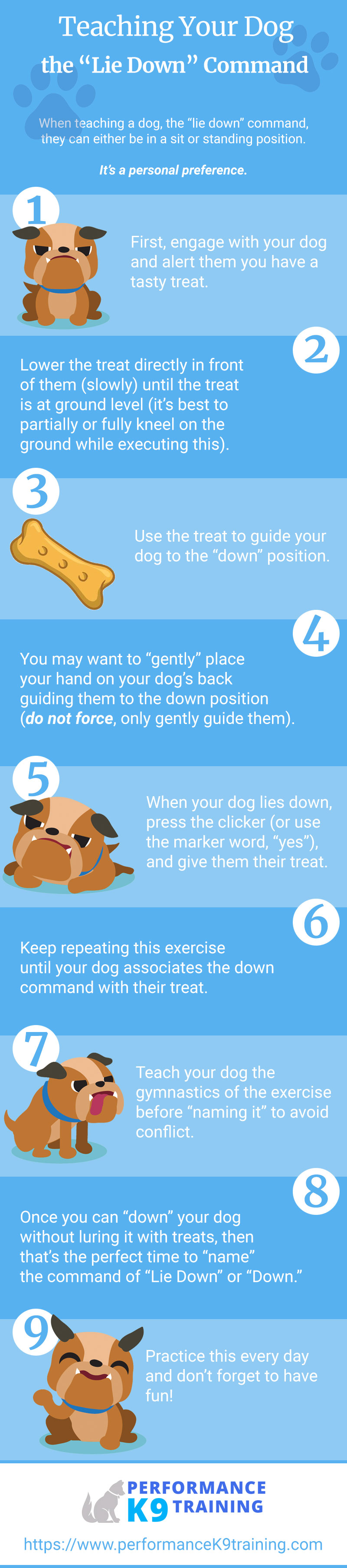
Credit: performancek9training.com
Selecting The Best Training Tools
Training tools make teaching your dog to lay down easier. Choose treats, clickers, or verbal cues for success. Consistency and patience are key for effective results.
Training your dog to lay down is an important step in building a strong bond and ensuring effective communication. Selecting the best training tools can greatly influence your dog's learning process. With the right tools, you can make training enjoyable for both you and your furry friend. But how do you choose the perfect tools for your dog? Let's explore some options that can enhance your training sessions.
Collars And Leashes
The collar and leash are fundamental components in any dog training toolkit. A well-fitted collar provides control and safety during training. Opt for a comfortable material, such as nylon or leather, that won't irritate your dog's skin. A sturdy leash offers you control over your dog's movements. Choose a length that gives you flexibility without losing control. Adjustable leashes can be handy for varying training environments. Have you ever noticed how your dog responds differently to a gentle lead versus a tug? It's worth considering how the type of collar and leash can impact your dog's behavior.
Treats And Rewards
Treats are a powerful motivator for dogs during training sessions. Select treats that your dog loves but doesn't get regularly. This makes them special and effective as rewards. Keep the treats small to prevent overfeeding and to maintain focus on training. Consider using a treat pouch for convenience, allowing quick access to rewards when your dog performs well. Have you tried different types of rewards? Praise, play, and treats can all serve as effective incentives. Experimenting with different rewards can reveal what truly motivates your dog. By choosing the right tools, you can create a positive training environment that facilitates learning and strengthens your relationship with your dog. What training tools have you found most effective with your dog? Share your experiences and insights to help fellow dog owners on their training journey.
Understanding Your Dog's Behavior
Teaching your dog to lay down builds trust and improves obedience. Start with a calm environment. Use a treat and simple commands. Practice patience and consistency for the best results.
Understanding your dog's behavior is crucial when training them to lay down. Dogs communicate through a complex mix of vocalizations, body language, and behaviors. Recognizing these signals can help you tailor your training approach effectively. It's not just about teaching commands, but fostering a deeper connection with your furry friend.
Reading Body Language
Dogs express themselves primarily through body language. Observing your dog's posture, tail position, and facial expressions can reveal a lot about their mood and intentions. Is your dog tense or relaxed? A wagging tail doesn't always mean happiness; it can sometimes signal nervousness. Consider this: if your dog is crouched with ears back, they might be scared or anxious. Recognizing these signs helps you adjust your training method to make it more comforting and effective. Trust is built when you respond appropriately to their signals.
Identifying Learning Styles
Just like humans, dogs have unique learning styles. Some dogs respond well to verbal commands, while others may be more visual learners. Have you noticed your dog reacting more to hand gestures than words? This might indicate a preference for visual cues. Reflect on your dog's responses during training sessions. Are they quick to follow when you demonstrate a command physically? If so, incorporating hand signals alongside verbal cues could enhance their learning experience. Understanding their preferred style can speed up the training process and make it enjoyable for both you and your dog. By paying close attention to your dog's behavior, you can create a tailored training plan. This personalized approach not only makes learning to lay down more effective but also strengthens your bond. What subtle cues have you noticed in your dog that could improve your training strategy?

Credit: www.youtube.com
Basic Commands Preparation
Training your dog to lay down starts with basic commands. A strong foundation is key. Your dog needs to learn to follow simple instructions. This builds trust and understanding. It makes advanced training easier.
Start with commands like sit and stay. These are essential. They teach your dog discipline. They also improve your dog's focus. Consistency is important. Repetition helps your dog learn faster.
Teaching Sit And Stay
The sit command is usually the first step. Hold a treat close to your dog's nose. Move your hand up. This encourages your dog to follow. As your dog's head goes up, its bottom will lower. Once your dog sits, give the treat. Say "sit" clearly. Repeat several times daily. This reinforces learning.
Next, introduce the stay command. Ask your dog to sit. Hold your palm out, like a stop sign. Say "stay" in a firm voice. Step back slowly. If your dog stays, reward it. Gradually increase the distance. Practice regularly for improvement.
Building Attention Span
Dogs often get distracted. Building attention span is crucial. Use short, engaging sessions. Keep your dog's focus with treats. Toys work too. Change activities if your dog loses interest. Patience is essential. Progress may be slow.
Introduce new environments. Start indoors where it's quiet. Move to places with more distractions. This helps your dog focus amidst noise. Consistent practice enhances concentration. Your dog will learn to listen better.
Step-by-step Training Process
Training your dog to lay down is an essential skill that can enhance your pet's obedience and strengthen your bond. A step-by-step approach ensures clarity and boosts your dog's confidence in learning new commands. Let's dive into the process and make this training session a fun and rewarding experience for both you and your furry friend.
Introducing The Command
Start by choosing a quiet space where distractions are minimal. This helps your dog focus better on you and the new command. Use a calm and friendly voice to say the word "down" clearly. Consistency is key, so stick with one word for this command. Have you ever noticed how your dog responds to your tone? That's because dogs are experts at reading vocal cues.
Luring With Treats
Grab a few of your dog's favorite treats to keep them motivated. Hold a treat close to your dog's nose, then slowly move it down to the ground. As your dog follows the treat, they will naturally lay down. Reward them immediately and praise them enthusiastically. Timing is crucial here; a delayed treat may confuse your dog about what they did right.
Using Hand Signals
Once your dog starts understanding the verbal command, introduce hand signals. This adds a visual cue that enhances communication between you and your dog. You can use a flat hand moving downward or any gesture you're comfortable with. Practice consistently, and soon, your dog will respond to the hand signal even without treats.
Training your dog is not just about teaching them tricks; it's about building a relationship. Have you noticed any unique quirks in your dog during training? These moments are what make the journey worthwhile. Keep sessions short and enjoyable, and always end on a positive note. Remember, patience and perseverance are your best tools in this rewarding adventure.
Practicing Consistency
Training your dog to lay down requires patience and regularity. Use the same command each time. Reward them with treats or praise when they follow instructions correctly. Consistency helps your dog understand what's expected, making the learning process smoother and enjoyable for both of you.
Practicing consistency is crucial in dog training. Dogs thrive on routine and clear expectations. Consistency creates a safe learning environment. It helps your dog understand what is expected. Establishing consistent patterns is key. This leads to successful training outcomes.
Routine And Repetition
Routine helps your dog feel secure. Use the same command each time. This builds understanding. Practice in the same location initially. Familiar settings reduce distractions. Repeat the training daily. Short sessions work best. Five to ten minutes is ideal. Consistent practice reinforces learning.
Avoiding Mixed Signals
Clear communication is essential. Use the same words and tone. Avoid changing commands. This confuses your dog. Your body language should match your words. Mixed signals cause uncertainty. Reward your dog consistently. Praise for the correct action. This strengthens desired behavior.
Handling Challenges
Training your dog to lay down can be challenging, but patience and consistency are key. Start with simple commands and reward good behavior. Gradually increase difficulty to build confidence and understanding.
Training your dog to lay down can be a rewarding experience, but it's not without its challenges. You might find that distractions, fear, or anxiety can interrupt your dog's learning process. Understanding how to manage these issues is key to effective training. By addressing these challenges head-on, you can help your dog master the lay-down command more smoothly.
Dealing With Distractions
Dogs are naturally curious creatures, and their attention can easily wander. A squirrel darting across the yard or the sound of a car horn can derail a training session. To tackle this, start in a quiet environment. Gradually introduce distractions as your dog becomes more confident with the command. Consider using treats or toys to keep their focus on you. Have you noticed that your dog's ears perk up at the slightest sound? Use this to your advantage by training in short sessions, keeping your dog's attention sharp and engaged.
Addressing Fear Or Anxiety
Fear or anxiety can be significant barriers in training. If your dog seems hesitant to lay down, it might be due to discomfort or insecurity. Take a step back and assess the situation. Is there something in their environment causing stress? Use positive reinforcement to create a safe space for learning. When my own dog was hesitant to lay down, I found that spending a few minutes on the floor at her level reassured her. Can you create a similar calming routine for your dog? By fostering a positive atmosphere, you'll encourage your dog to engage willingly. Remember, patience is essential, and progress can sometimes take time.

Credit: petstek.com
Rewarding Progress
Teaching your dog to lay down involves patience and consistency. Begin with a calm voice and clear commands. Reward progress with treats, reinforcing positive behavior.
Rewarding your dog's progress is a crucial part of training them to lay down. It not only helps reinforce the behavior but also builds a positive bond between you and your furry friend. As your dog learns, celebrating small victories keeps them motivated and eager to learn more.
Positive Reinforcement
Using positive reinforcement is key to teaching your dog new tricks. Reward your dog every time they successfully lay down. Use treats, verbal praise, or a favorite toy as a reward. Imagine how you feel when someone appreciates your work. Your dog feels the same way with treats and praise. Consistency is important. Always reward the desired behavior promptly.
Gradually Reducing Treats
Once your dog consistently lays down on command, start reducing the number of treats. This ensures they don't become dependent on treats alone. Shift to verbal praise or a petting session instead. Keep the rewards unpredictable, like a surprise. This keeps your dog engaged and attentive. Have you ever noticed how a surprise gift feels more exciting? Remember, training is a journey, not a race. Celebrate each small step with your dog, making the learning process fun and rewarding for both of you.
Maintaining Long-term Success
Teaching your dog to lay down is key for long-term success. Start with treats and gentle commands. Practice regularly. Keep sessions short. Reward every correct move. Positive reinforcement helps dogs learn faster and enjoy training.
Training your dog to lay down is more than just a one-time event. It's an ongoing process that requires dedication and consistency. To ensure that your dog retains this skill and follows your command reliably, maintaining long-term success is crucial. As you and your dog grow together, you'll need to continue practicing regularly and adapt to new situations. Let’s explore how you can make this a lifelong success.
Regular Practice Sessions
Regular practice sessions are key to reinforcing the "lay down" command. Aim for short, daily sessions instead of long, sporadic ones. This keeps your dog engaged and prevents them from getting bored or frustrated. Use treats or toys as positive reinforcements during these sessions. Reward your dog immediately after they lay down to strengthen the association. Keep the sessions fun and light-hearted—dogs learn best when they're having a good time. Consistency is your friend. Stick to a routine and use the same command words. Dogs thrive on predictability, and this helps them understand what you expect. Have you ever noticed how your dog seems to know when it's mealtime? That's the power of routine!
Adapting To New Environments
Dogs need to know how to lay down in various environments, not just in the comfort of your living room. Begin by introducing new settings gradually, like your backyard or a quiet park. These small changes can make a big difference in your dog's ability to generalize the command. As your dog becomes more confident, challenge them with busier environments. Perhaps a bustling café patio or a lively dog park. It's important to remain patient and calm, as new surroundings can be distracting or overwhelming for your dog. Travel with your dog and practice the command in unfamiliar places. This will strengthen their skills and build their confidence. Have you ever wondered how some dogs can lay down on a crowded sidewalk while others can't? It often comes down to how well they've been trained to adapt. Maintaining long-term success is all about consistency and flexibility. With regular practice and exposure to different environments, your dog will not only learn to lay down on command but will also become a more adaptable and confident companion.
Frequently Asked Questions
How Long Does It Take To Train A Dog To Lay Down?
Training your dog to lay down typically takes a few weeks. Consistency, patience, and positive reinforcement are key. Practice daily in short sessions. Every dog learns at its own pace, so be patient. Reward progress to encourage learning.
What Commands Help A Dog Lay Down?
Use commands like "down" or "lay down" consistently. Pair the verbal cue with a hand gesture for better understanding. Reward your dog immediately upon success. Consistency and repetition are essential for effective training.
Why Won't My Dog Lay Down On Command?
Your dog might be confused or distracted. Ensure a quiet environment for training sessions. If your dog struggles, break the command into smaller steps. Use treats to motivate and encourage learning. Patience is crucial for success.
Can Older Dogs Learn To Lay Down?
Yes, older dogs can learn new commands like "lay down. " They may require more patience and time. Use positive reinforcement and gentle encouragement. Break the command into manageable steps. Adapt to your dog's pace for effective training.
Conclusion
Training your dog to lay down strengthens your bond. Practice daily for best results. Be patient and consistent with each session. Positive reinforcement encourages good behavior. Use treats and praise generously. Your dog learns better with encouragement. Keep sessions short to maintain focus.
Gradually increase distractions as your dog improves. Celebrate small victories along the way. These steps lead to a well-behaved pet. Enjoy the process and watch your dog grow. A calm dog means a happy home. Keep training fun and rewarding for both.
Your efforts will pay off in time. Happy training!


